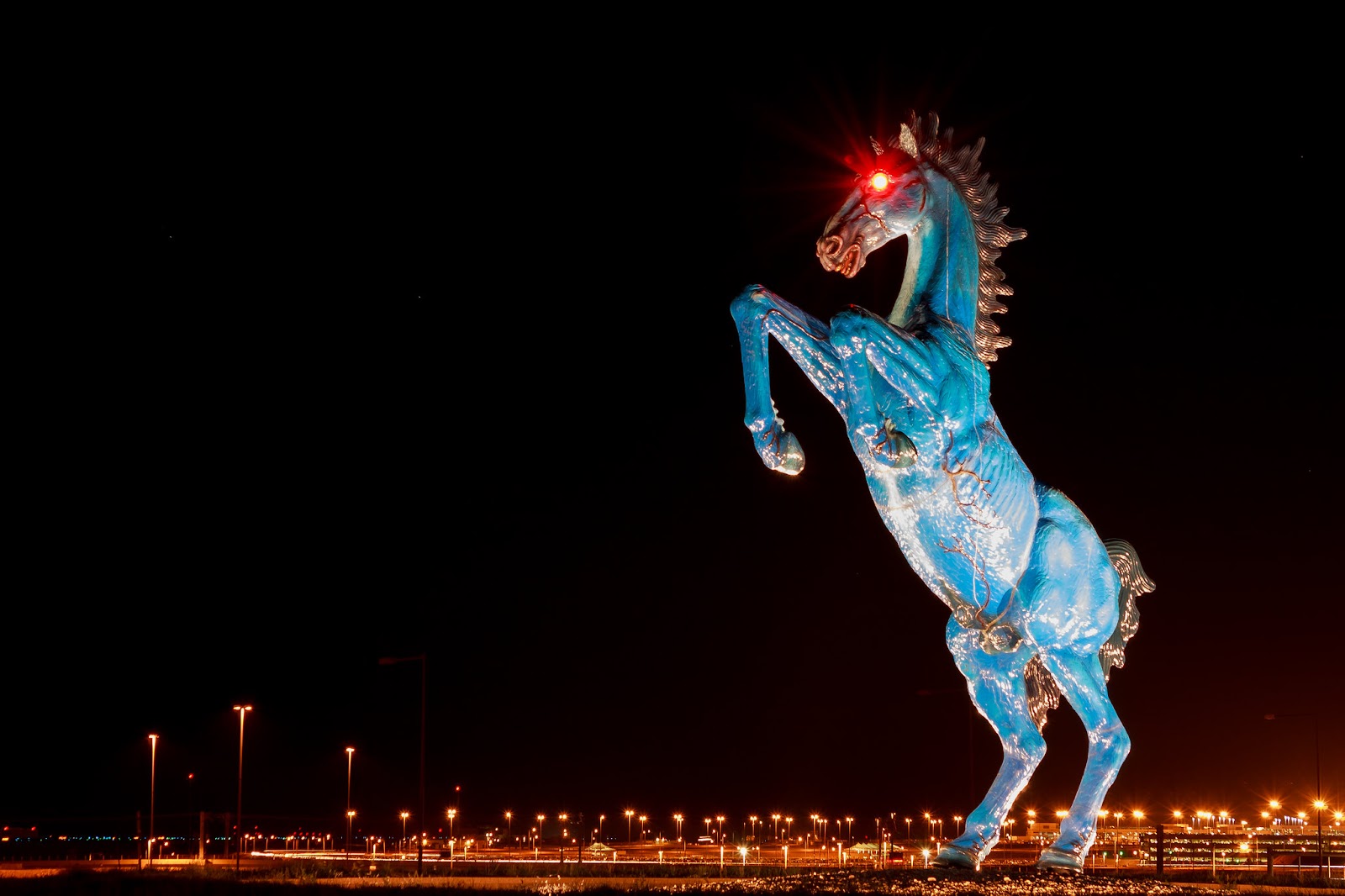
What is Blucifer? Blucifer is the 32-foot blue horse sculpture with glowing red eyes at Denver International Airport. Its creator, Luis Jiménez, was killed by the sculpture in 2006 when a piece fell on him. Located on Peña Boulevard about 1 mile from the terminal, you'll see it driving to/from DEN. Best viewing: night when the red LED eyes glow brightest.
The Basics
Blucifer's official name is "Blue Mustang"—a 32-foot fiberglass sculpture weighing 9,000 pounds. The horse rears on its hind legs, muscles bulging beneath electric blue skin, with LED-lit eyes casting a menacing red glow after dark. Commissioned in 1993, installed in 2008, cost $650,000.
The sculpture sits on Peña Boulevard, the main road into Denver International Airport. You'll see it about a mile before reaching the terminal—impossible to miss by car, shuttle, or rideshare.
How It Killed Its Creator
Sculptor Luis Jiménez began working on Blue Mustang in 1993 after winning a $300,000 commission. The project was supposed to take two years—it took fifteen, and cost Jiménez his life. On June 13, 2006, a large section came loose from a hoist in his New Mexico studio, struck him, and severed an artery in his leg. He died at age 65.
His sons Adan and Orion, along with studio assistants, finished the sculpture based on their father's detailed plans. Blue Mustang was unveiled in 2008—twelve years after the airport opened.
Why the Glowing Red Eyes?
The red eyes weren't added for shock value—they're a deliberate artistic choice. Luis Jiménez grew up in El Paso, Texas, where his father ran a neon sign shop. He incorporated illuminated elements into many works throughout his career. The blue color references Native American "blue horse" traditions and New Mexico's landscape.
The LED eyes serve a practical purpose too: they're visible from a distance at night, creating a landmark for travelers. But the effect is undeniably unsettling—especially driving alone at 2 AM when those crimson eyes appear in your headlights.
Conspiracy Theories
Blucifer has become ground zero for Denver Airport conspiracy theories—and the airport has leaned into it. DEN is already famous for theories involving underground bunkers, New World Order symbolism, and mysterious murals. Add a demonic horse that killed its creator, and imaginations run wild: the "Fourth Horseman" from Revelation, an Illuminati symbol, a guardian of underground secrets.
Denver International embraced its weird reputation. In 2018, they installed talking gargoyle statues joking about conspiracies with passengers. The airport's social media regularly plays along with Blucifer content.
Public Reaction
Opinions were sharply divided from day one. Critics call it "Satan's Steed," "DIAblo," and "the worst public art in America." Multiple petitions demanded removal. A 2009 city council measure to relocate it failed. Supporters argue controversial art sparks conversation, and love it or hate it, nobody forgets it.
Today Blucifer has evolved from controversial eyesore to beloved mascot. You'll find the image on t-shirts, stickers, coffee mugs, and tattoos throughout Colorado.
Visiting Blucifer
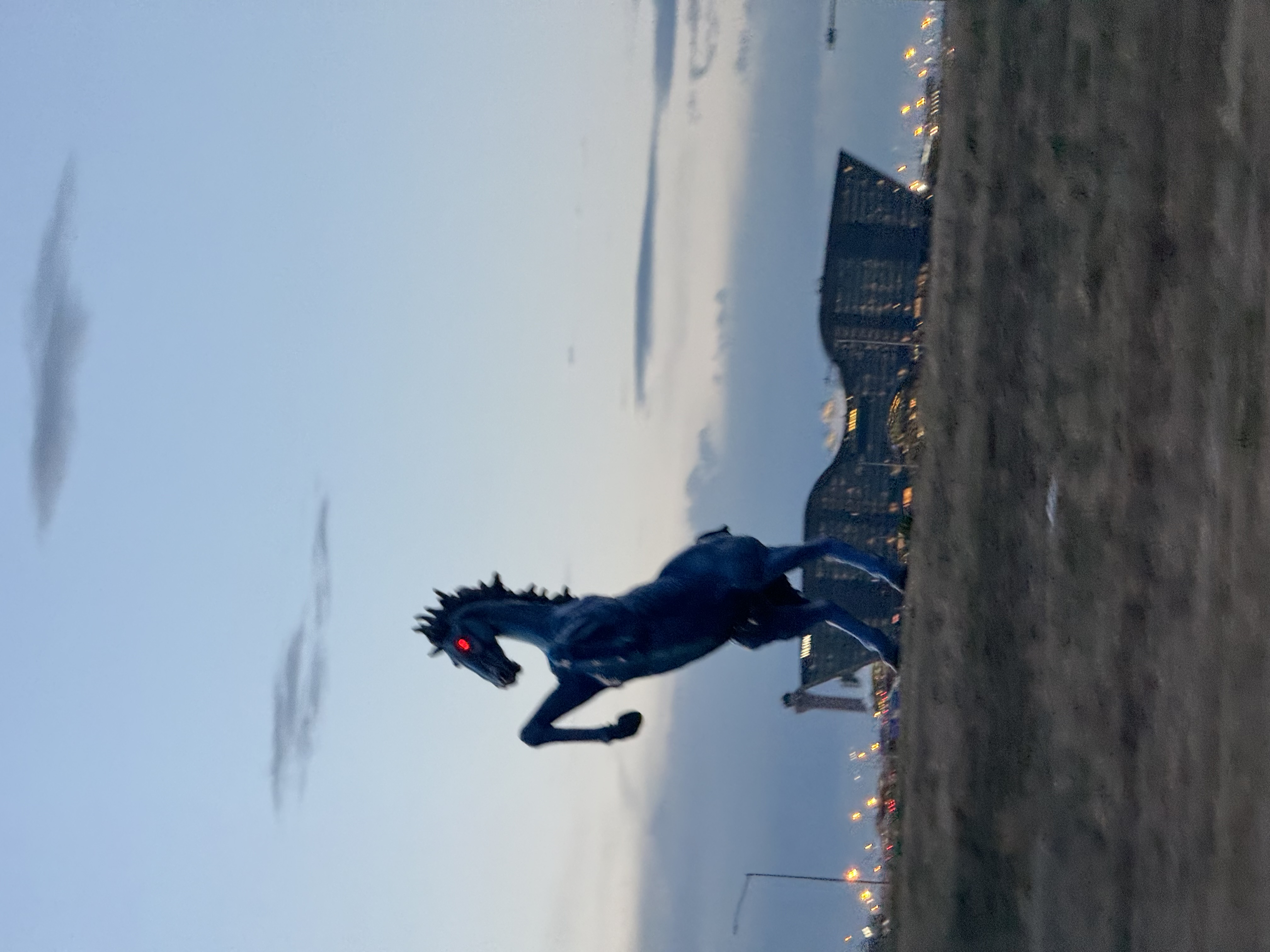
Blucifer stands on the grassy median of Peña Boulevard, about one mile east of the main terminal (GPS: 39.8497° N, 104.6736° W). You'll pass it automatically driving to/from DEN—the sculpture faces incoming traffic so you get the full frontal view, glowing eyes and all.
No parking or pedestrian access on Peña Boulevard—it's illegal and dangerous. Best photo option: ask your driver to slow down as you pass. Some photographers park at the cell phone lot and walk along the shoulder (not officially sanctioned). Best views at night when eyes glow brightest.
The Artist's Legacy
Luis Jiménez (1940-2006) was a pioneering Chicano artist known for monumental fiberglass sculptures celebrating Mexican-American culture and the American Southwest. Major works include "Vaquero" at the Smithsonian, "Southwest Pietà" addressing border violence, and "Fiesta Jarabe" in Albuquerque.
His death while creating the sculpture adds tragic weight. This isn't just art—it's the final work of an artist who gave his life to complete it, finished by his sons to honor their father's vision.
Frequently Asked Questions
What is the story behind Blucifer?
Blucifer is a 32-foot sculpture commissioned by Denver International Airport in 1993. Artist Luis Jiménez worked on it for over a decade before being killed by the sculpture in 2006 when a piece fell and severed an artery. His sons completed the work, installed in 2008.
What happened to the artist who made Blucifer?
Luis Jiménez died on June 13, 2006, when a large section of Blue Mustang came loose from a hoist in his studio, struck him, and severed an artery. He was 65. His sons Adan and Orion finished the sculpture according to his plans.
Why does Blucifer have red eyes?
The glowing red LED eyes were an intentional artistic choice by Luis Jiménez, inspired by his father's neon sign shop in El Paso. He incorporated illuminated elements in many sculptures. The eyes also serve as a landmark for travelers approaching the airport at night.
Where is Blucifer located?
Blucifer stands on the median of Peña Boulevard, approximately one mile east of Denver International Airport's main terminal. You'll pass it driving to/from DEN. GPS coordinates: 39.8497° N, 104.6736° W.
Can you take photos with Blucifer?
You can photograph from a moving vehicle, but there's no legal way to stop on Peña Boulevard or walk to the sculpture. Some visitors photograph from the cell phone waiting lot, though walking along the road shoulder isn't officially sanctioned.
Is Blucifer still at Denver airport?
Yes. Despite multiple removal petitions and ongoing controversy, Blue Mustang remains at Denver International Airport. The city owns the sculpture, and there are no current plans to relocate it.